Core5 mapped NDA questions
Build the idea
Build exam-ready understanding by connecting the core idea, formulas or facts, worked example and previous NDA questions. Focus on why each rule works, then test it under timed conditions.
Concept
Density is mass per unit volume; specific gravity (relative density) compares a substance's density with that of water. Archimedes' principle explains buoyancy — why objects float or sink.
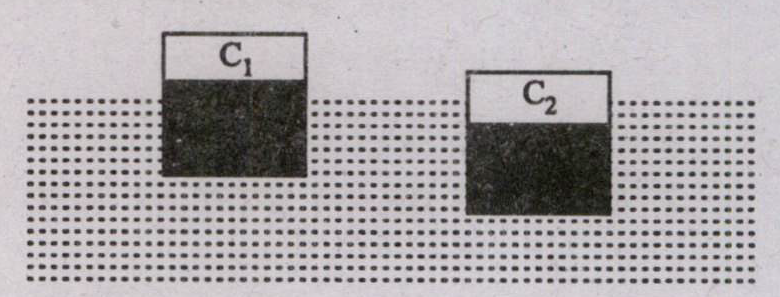
An object floats if its density is less than that of the fluid.
Key Points & Formulas
- Density = mass / volume.
- Specific gravity = density of substance / density of water (no unit).
- Archimedes: upthrust = weight of fluid displaced.
- Floats if density < fluid density; sinks if greater.
Worked Example
Q. A block of 200 g occupies 250 cm³. Find its density and state whether it floats in water.
Density = 200/250 = 0.8 g/cm³.
Water's density is 1 g/cm³; 0.8 < 1, so the block floats.